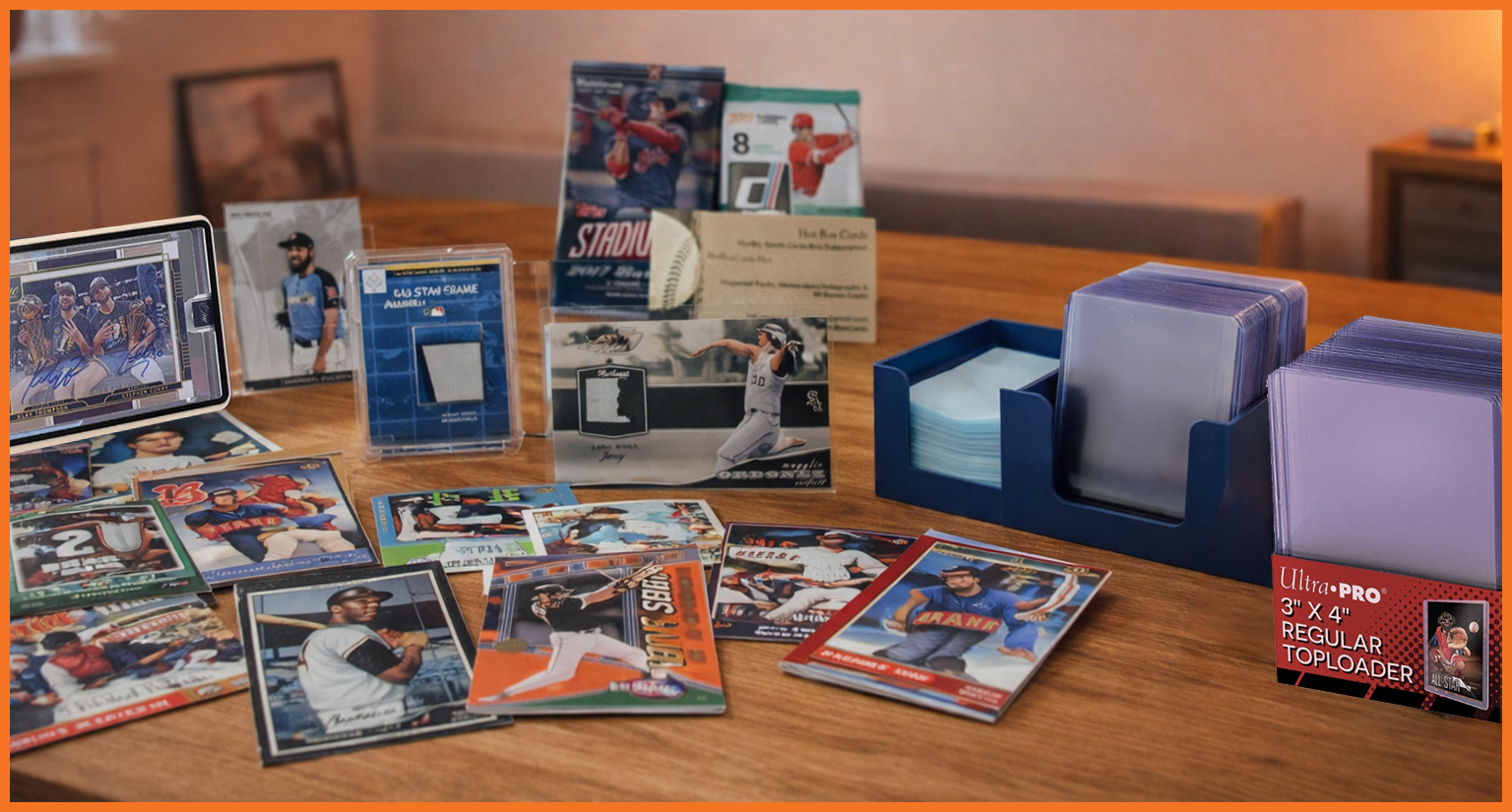

Numbers drive the sports card hobby. From serial numbers to numerical grades and pop reports, the numbers tell the bigger story. The Hobby Sentinel takes a deeper, more critical look at how data is being used in the sports card hobby, and what it quietly reveals about the market. This exploration of hobby data by volume reveals truths that many in the hobby don’t want to admit.
Hobby Data By Volume
The phrase “saying the quiet part out loud” refers to revealing a truth that’s usually understood but not openly admitted. In this context, the article suggests that hobby data, including prices, pop reports, and grading trends, does exactly that. It unintentionally exposes how much of the modern card market is driven by speculation, perception, and manufactured demand rather than pure collecting.
If you’ve been in the hobby long enough, you know that bubbles come and go. In a hot market, shelves are empty of the most sought-after products, with FOMO causing some speculators to go to extremes. Once the bubble bursts, the opposite effect takes place. The product sits unopened, while manufacturers scramble with gimmick inserts and parallels to incentivize the market to buy.
What Lies Beneath
Instead of reinforcing the idea that the hobby is growing in a healthy, organic way, the data often shows something very different beneath the surface. Growth isn’t just volume or units moved; it’s about the number of new participants spending their hard-earned dollars. If these new participants are stumbling their way through a hobby and getting burned in the process, they aren’t going to stick around long term.
In a hobby, demand is largely based on desire. The better a product is, the more demand for it will grow. Sometimes that demand is instantaneous, while other times it comes in waves and takes time to mature. When manufacturers “turn and burn” products to fill demand, they often cut corners, make mistakes, and trip over their own feet trying to make a quick buck.
Influencers and hobby gatekeepers can only prop up a mediocre product for so long. They’ll often point to rising values of cards in a set or a new release to validate their claims. What they rarely mention, or conveniently miss, is the overproduction, secondary market inflated prices, and speculative bubbles baked into young prospects, who rarely become stars.
Perception VS Fundamentals
A major theme in the Substack article is that card values are often based more on perception than intrinsic value. I’ll try not to get on my soapbox here, but this is one of my main gripes with the hobby. People spend money in the dumbest ways imaginable. These irresponsible spending sprees are often backed by hype cycles for prospects who have never touched a Major League field.
On top of that, you’ve got participants buying cards based on grading labels, rather than the cards inside the cases. Grading is a highly subjective exercise. You are paying someone for their opinion, and hoping that they get it right. As the saying goes, not every “10” is a “10.” There are also plenty of counterfeit cards with active cert numbers in circulation. Caveat emptor, if you will.
The sports card hobby operates with a persistent optimism bias in its media and commentary ecosystem.” – Stitchy McPatcherson
Finally, there’s the abundant reliance on valuation by the masses. Time after time, we’ve seen this fallacy play out in the hobby. All you have to do is take a look at the pop reports for rookie cards for players like Gavin Lux, Zion Williamson, and Mac Jones. What the masses think something is worth is not an indicator of true or long-term value. The article suggests that data makes this obvious. Even if the hobby doesn’t openly acknowledge it.
Pop Reports & Scarcity
Population reports are a good place to start, but don’t rely on them to tell you the entire story. One of the biggest “quiet truths” exposed by data is how many cards actually exist in high grades. While reports may show you that thousands of “high-grade” copies exist, they also reveal market oversupply. If thousands of graded copies of a card already exist, there’s little point in continuing to grade more. With a little math, you can quickly figure out the gem rate for most modern cards (Spoiler: It’s usually high).
Pop reports also reveal the perceived rarity versus the actual supply of a given card. Once you look at the data, you may realize that many “rare” cards aren’t rare at all. If you’re planning to make a purchase, check the pop reports across all grading companies and evaluate the true supply available. Many times, buying a raw copy of the card you want will save you time and money. It’s also worth considering: If a card has to be graded for it to have value, is it worth buying at all?
Data Is a Tool
As modern collectors, we now have more tools and data at our fingertips than ever before. We’re also bombarded by influencers, advertisements, and marketing propaganda at a rate never before witnessed. Not only must we interpret the data before us, but we must also understand the context and consider the source. That’s why independent voices like the Hobby Sentinel are so important. If you haven’t already, I’d highly recommend subscribing to their Substack. It’s free, and it gets delivered to your inbox on a weekly basis.
Find Out More: Hobby Data By Volume
Subscribe to our Collector Newsletter below, and follow us on Instagram at this link.